
One philosophy that I’ve always believed in is to manage by outcomes.
At datavruti, I don’t ask my team how many resumes were reviewed, how many calls were made or how many profiles were submitted.
Closures matter.
Outcomes matter.
Bottomline matters.
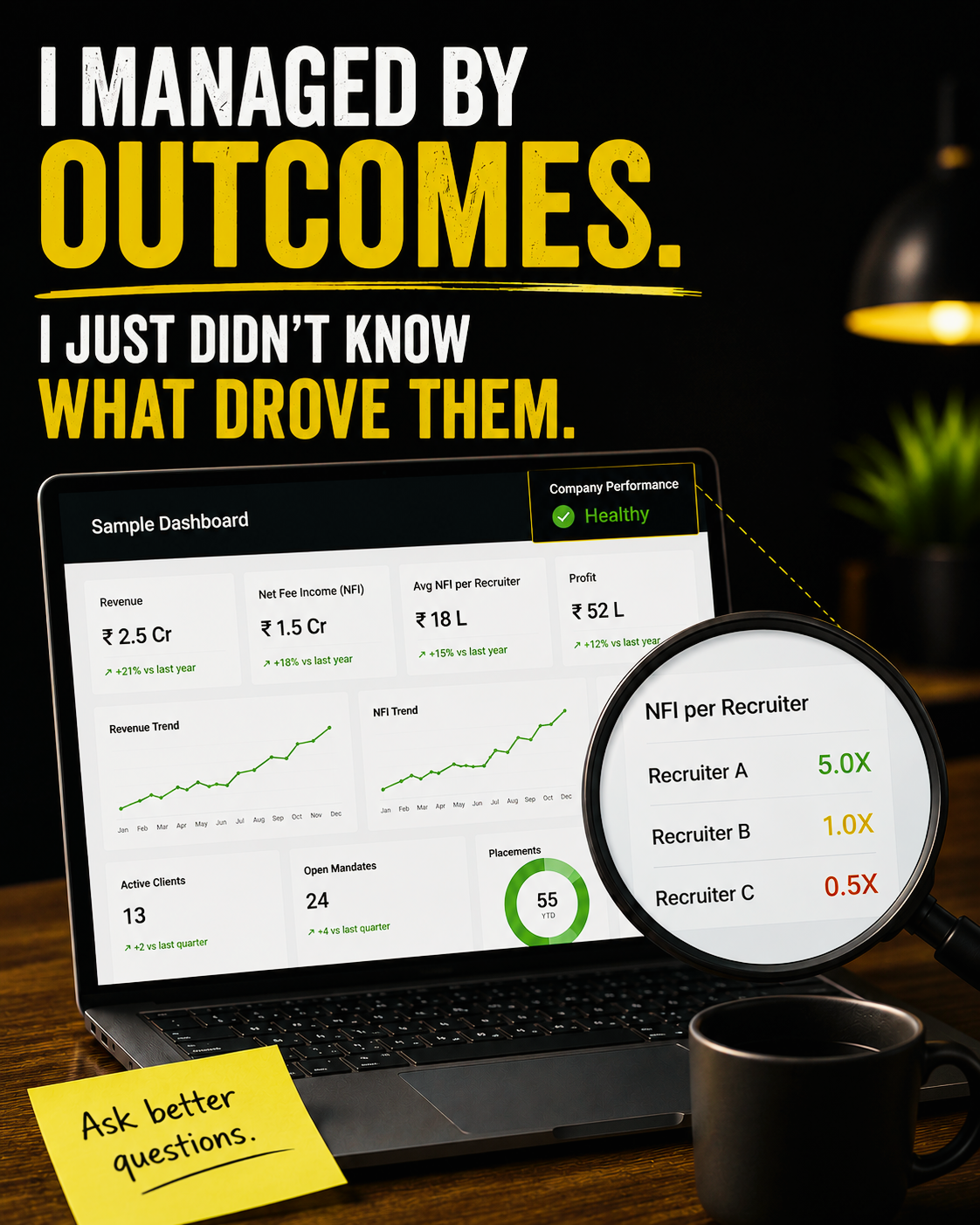
𝐓𝐡𝐞 𝐦𝐢𝐬𝐭𝐚𝐤𝐞
Where I initially got it wrong was taking this philosophy to one extreme.
I only looked at outcomes at the company level.
If the business had a great year, I assumed we were doing something right.
If we hit our numbers, I didn't spend enough time understanding how we got there.
A few years into building datavruti, I realised that managing by outcomes and understanding outcomes are two very different things.
𝐓𝐡𝐞 𝐮𝐧𝐢𝐧𝐭𝐞𝐧𝐝𝐞𝐝 𝐜𝐨𝐧𝐬𝐞𝐪𝐮𝐞𝐧𝐜𝐞
A recruiter billing 5X their salary cost could quietly hide someone billing 0.5X.
Someone could have an incredible year because they inherited a set of mandates that perfectly matched their strengths.
Someone else could struggle because of offer drops, difficult clients, niche requirements, location constraints or compensation mismatches.
I found myself asking questions I should have asked much earlier:
- Was this recruiter genuinely struggling?
- Were they simply unlucky?
- Were we setting them up for success?
- Or were we expecting everyone to succeed under completely different conditions?
The answer wasn't always obvious.
𝐓𝐡𝐞 𝐬𝐡𝐢𝐟𝐭
Over time, I started separating things into three buckets.
Things we 𝐜𝐨𝐧𝐭𝐫𝐨𝐥.
Things we can 𝐢𝐧𝐟𝐥𝐮𝐞𝐧𝐜𝐞.
Things we 𝐝𝐨𝐧'𝐭 𝐜𝐨𝐧𝐭𝐫𝐨𝐥.
We can control preparation, candidate quality, stakeholder management, communication and follow-through.
We can influence candidate experience, client relationships and offer conversions.
There are also things that simply happen despite our best efforts:
- Clients freeze hiring.
- Candidates back out.
- Budgets change.
- Business cycles shift.
Once I started looking at performance through this lens, the conversations became better.
Less judgement.
More curiosity.
Less comparison.
More coaching.
𝐓𝐡𝐞 𝐣𝐨𝐮𝐫𝐧𝐞𝐲
I don't think I've fully figured this out.
What I do know is that I no longer want recruiters to think of themselves as profile pushers.
I want them to gradually understand the 𝐞𝐜𝐨𝐧𝐨𝐦𝐢𝐜𝐬 𝐨𝐟 𝐭𝐡𝐞𝐢𝐫 𝐨𝐰𝐧 𝐰𝐨𝐫𝐤.
- know where they thrive.
- understand what slows them down.
- recognise the difference between effort and contribution.
- develop an intuition for where they're likely to create value.
In some small way, I want them to think a little more like business owners, and over time, influence where the business itself goes.
I'm curious how other founders think about this.
How do you separate performance issues from process issues, market realities and plain old bad luck?